One part of Orthodox theology that differentiates it from the rest of Christendom is its view of salvation. In Eastern Christianity, we see salvation as an ongoing process of purification that reaches beyond this world into eternity. Throughout this process, we participate in the life of the Church. We go to Confession, receive the Eucharist, and strive to love God with our whole heart, strength, soul, and mind. This helps us become more and more like Jesus Christ. Thus, the Orthodox refer to this process of salvation as theosis, or deification.
Note: We use deification, theosis, and salvation interchangeably throughout this post. They refer to the same process of attaining salvation.
Estimated reading time: 5 minutes
What does deification mean?
Deification (Gr. theosis) is the process by which a Christian becomes more like God. Saint Peter speaks of this process when he writes, “As His divine power has given to us all things that pertain to life and godliness . . . you may be partakers of the divine nature” (2 Peter 1:3-4). But what does it mean to partake of the divine nature, and how to we experience it? To answer these questions, first we must explain what deification is not.
What it’s not
Many people outside the Orthodox Church mistakenly believe that deification means we become literal gods. When the Church calls us to pursue godliness – to become more like God – this does not mean we then become like God in His essence or nature; this is impossible. We are human, always have been and always will be. Therefore, we cannot take on the nature of anything else, especially that of God, which is utterly unknowable to us.
St. John of Damascus (8th century) makes a remarkable observation. The word “God” in the Scriptures refers not to the divine nature, but instead to the divine energies – the power and grace of God which we perceive in this world. The Greek word for God (Theos) used in Scripture comes from a verb meaning run, see, or burn. These are energy words, not essence (or being) words.
Related: Saint Gregory Palamas and the Essence/Energies Distinction
Moreover, in John 10:34, Jesus repeats the passage, “You are gods,” from Psalm 82:6. In calling out a group of hypocritical religious leaders who accused Christ of blasphemy, Jesus makes the meaning of this passage doubly clear. Jesus is not using “God” in this context to refer to the divine nature. In contrast, we are gods in that we bear His image, not His nature.
What it is
According to the Orthodox Church, deification is our becoming more like God through His grace or divine energies. In creation, humans were made in the image and likeness of God (Gen. 1:26) according to human nature. In other words, all of humanity by nature is an icon or image of God. From the beginning, we were meant to share in the Life of the Holy Trinity.* Through sin, however, we warp this icon into something it shouldn’t be.
Christ’s Incarnation restores all of humanity to its full potential, because He took to Himself our entire human nature (including the sufferings due to sin, while not a sinful man Himself). In Christ, the two natures of God and man are no longer two but one; thus, there is perfect union in Christ, between all of humanity and God. Through union with Christ, we too can experience that perfect communion. We can become by grace what God is by nature (St. Athanasius of Alexandria) and can become children of God (John 1:12). That is salvation. That is what it means to be saved.
A helpful illustration of deification is the sword and fire example. Imagine a steel sword thrust into a hot fire. It remains there until it takes on a red glow. The energy of the fire interpenetrates the sword, but the sword never becomes the fire itself. Instead, it merely takes on the properties of the fire.
Surpassing Adam and Eve?
For many Fathers, theosis goes beyond simply restoring people to their state before the Fall of Adam and Eve. In fact, some teach that because Christ united the human and divine natures in his person, it is now possible for someone to experience closer fellowship with God than Adam and Eve initially experienced in the Garden of Eden. Additionally, some teach that people can become more like God than Adam and Eve were at that time. Other Orthodox theologians go so far as to say that Jesus would have become incarnate for this reason alone, even if Adam and Eve had never sinned.
Similarly, the divine energies interpenetrate our human nature through Christ’s glorified flesh. Nourished by the body and blood of Christ in the Eucharist, we partake of the grace of God – His strength, His righteousness, and His love. We are enabled to serve and glorify Him and to live the life He asks of us. Thus we are being deified, yet remain human. We are becoming like God and attaining salvation.
What if someone dies rejecting God?
Because theosis is a process, Orthodox theology affirms the continuation of progress in deification after a person’s death. However, theosis does not begin in eternity, but now. As the Scriptures say, “Now is the day of salvation” (2 Corinthians 6:2).
Ultimately, God does what He wills, so there are many things we simply cannot know about the nature of what awaits us or what is possible after death.
Conclusion
Salvation to the Orthodox is the process of deification or becoming more like God. However, this does not mean we become God in His nature. Rather, we become like Him through His energies and can attain perfect union with Him just as Christ illustrated in His incarnation. This view of salvation was the belief of the early Church and continues to be preserved in the Life of the Church to this day.
Read More: Ancestral Sin: The Fall and its Consequences
*Therefore, both infants and adults are saved from the state of unholiness (hamartía — which is not to be confused with hamártēma “sin”) by participating in the Life of the Trinity — which is everlasting. This is part of the reason why the Orthodox Church continues the early Church’s practice of infant baptism.
7 Responses
Hello and thank you for this resource. I have a question regarding the difference between this idea of deification vs a similar idea I have heard in my more protestant circles of Sanctification – “referring to the progressive work of God to make a believer more like Jesus” (https://www.christianity.com/jesus/following-jesus/repentance-faith-and-salvation/what-does-sanctification-mean.html)
Is this the same idea but with a different name?
Also the conclusion says “Salvation… is the process of deification”
I’m having a hard time understanding this. My understanding of Salvation has traditionally been something that happens at one point in a persons life and at that point we are justified by faith through grace. Then everything after that, our “sanctification” is the process by which we become more like Christ. We become more like Christ as a fruit of our salvation, but this seems to be saying it is this process that is our salvation, not a fruit of our salvation.
Can you help me to understand this more?
Mark,
Christ is risen! Thank you for your questions. Regarding the article you sent: what you hear from Protestant circles is definitely similar, although there are differences in the way the doctrine is explained and formulated. We refer to salvation primarily as Theosis because it reflects the reality of what is happening. We are becoming partakers of the Divine Nature and are becoming more and more like God Himself. Naturally, achieving a process like this cannot possibly happen in a single moment, otherwise achieving it would mean nothing. Through the power of our own free will, we decide whether we will work in synergy with God to achieve deification, or not. And even after effectively saying, “yes” to God, there is always the possibility to fall away, as Judas Iscariot once did. Judas believed, and yet betrayed Him, falling away out of avarice. Every day of our lives we fight against sin and vice, turning away from them and toward God. The Protestant approach tends to make it more about “being like Jesus” than becoming like God. Jesus is God, so in effect, the existential meaning is the same; however, the language simply limits the Protestant understanding of salvation into “being a good person like Jesus was” rather than actually striving to attain the measure of holiness that God Himself has always possessed, and that He modeled for us when He became Man.
Regarding your second question: In Eastern Orthodox theology, theosis (salvation) is understood to have three stages: first, the purgative way, purification, or katharsis; second, illumination, the illuminative way, the vision of God, or theoria; and third, sainthood, the unitive way, or theosis. Thus the term “theosis” describes the whole process and its objective. By means of purification a person comes to theoria and then to theosis. Theosis is the participation of the person in the life of God. So it is both the process and the fruit.
We hope this helps you grow your understanding. Please feel free to post any follow-up questions you may have. God bless you!
Hello,
This is wonderful.
May you recommend some books?
Thank you.
Mette,
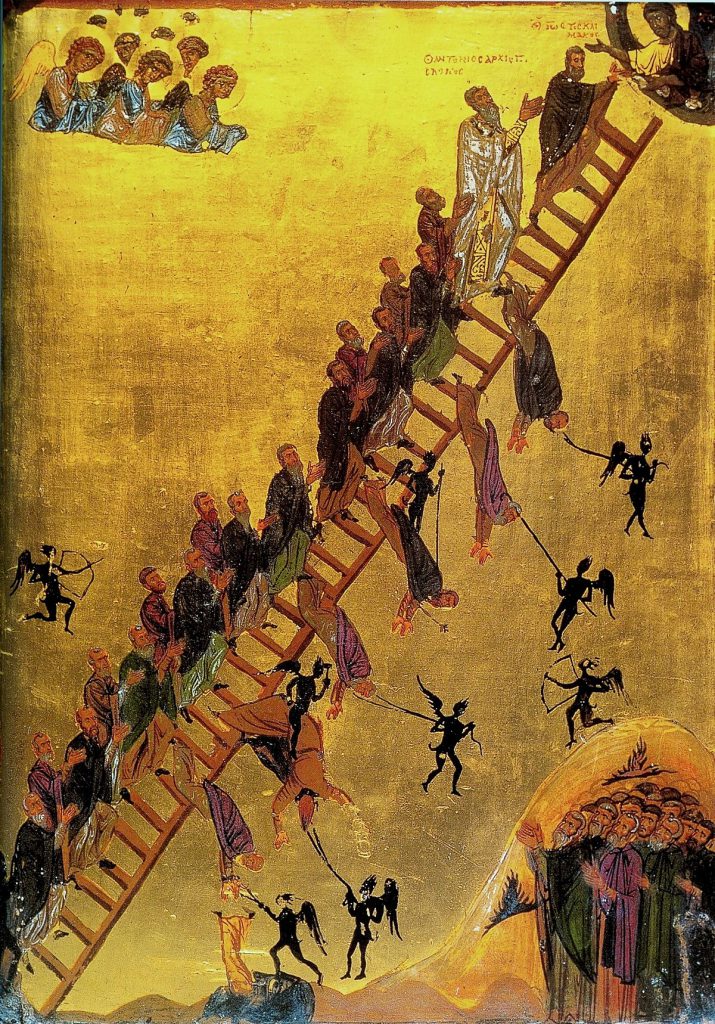
Christ is in our midst! If you would like some recommendations about the Orthodox theology of salvation, here are a few: “Deification Through the Cross: An Eastern Christian Theology of Salvation” by Khaled Anatolios; “Fellow Workers with God: Orthodox Thinking on Theosis” by Norman Russell; “The Ladder of Divine Ascent” by Saint John Climacus; and “The Mystical Theology of the Eastern Church” by Vladimir Lossky. There are quite a number of books on the topic, but this can at least serve as a starting point. God bless!
The struggle is indeed our salvation
Why didn’t God make me the most powerful and intelligent angel? I hate God for creating me weak, I hate God for creating me ignorant. Unlike Lucifer, I don’t want to be greater than God; I would accept being below Him. I could be the most intelligent and powerful of angels, and more powerful and intelligent than the future saved by an incomparable level, but instead, He didn’t give me the right to choose. He just made me this way, and He still claims to be love and justice even though His actions show the opposite. I will always hate God for making me this way.
Gabriel,
Christ is in our midst. Thank you for your honesty and for sharing such deep pain and frustration. What you’re expressing is not uncommon. Many people, at some point in their lives, wrestle with questions about their own worth, the way they were created, and the justice or love of God. The psalms themselves are full of cries to God in confusion, anger, and even despair (see, for example, Psalm 13, Psalm 22, or Psalm 73). God is not afraid of our honest questions or even our anger; He listens to every prayer, even those spoken in bitterness. From an Orthodox Christian perspective, there are a few things to consider, offered with deep respect for your struggle.
Orthodox theology teaches that each person is created uniquely, not by accident but with a purpose, even if that purpose is hidden from us. God does not measure greatness by intelligence or power, but by love, humility, and communion with Him and with others (see 1 Corinthians 1:27–29; Matthew 20:25–28). In God’s Kingdom, “the last will be first, and the first last.”
It’s human to compare ourselves, whether to angels, to other people, or to some imagined ideal. But comparison often leads us away from gratitude and blinds us to the gifts we have been given. The saints teach that the path to peace and joy is to accept ourselves as we are and to offer our weaknesses to God, allowing Him to transform them. The Apostle Paul writes, “My grace is sufficient for you, for my power is made perfect in weakness…for when I am weak, then I am strong” (2 Corinthians 12:9–10). In the eyes of God, every person, no matter how “weak” or “ignorant”, is of immeasurable worth. The Son of God became human not to save only the greatest or the wisest, but every one of us. Christ descended to the depths of human suffering, loneliness, and even death, so that no one would be abandoned or unloved.
God does not force love or faith. He invites each of us to bring our doubts, struggles, and even our anger to Him in prayer. Many saints began their journey in darkness or rebellion, but through honesty and persistence, they encountered the living God in ways they never expected. The journey from anger to understanding is not always quick or easy, but it is a path walked by many before you.
Though it may not feel possible now, consider the possibility that your very questions and pain are not obstacles to God, but the beginning of a new relationship with Him: one based on honesty, struggle, and the hope that He can bring meaning even out of suffering. If you are willing, you might try saying to God, “I don’t understand. I’m angry. But if You are truly good, show me. Meet me in my weakness.” The Orthodox tradition assures us that God is patient, merciful, and far greater in love than we can imagine. If you wish to talk more or have questions about faith, meaning, or your place in the world, you are not alone. The Church is a hospital for broken hearts, and there is space for your pain and your questions.
May God, in His time and His way, bring you peace, healing, and the knowledge of His love.