If you’ve ever discussed Christianity with a Protestant friend, you’ve likely heard the question: “Have you been born again?” For Orthodox Christians, this question opens a profound discussion about the meaning and significance of Holy Baptism. What actually happens in this mystery? What does it mean for our salvation? And how do Orthodox beliefs about Baptism differ from most Western Christian traditions? This article aims to provide a comprehensive, theologically rich answer, drawing on Scripture, the Church Fathers, and liturgical tradition.
8 minutes
Born of water and the Spirit
The phrase “born again” comes from the Gospel of John, where Jesus tells Nicodemus: “Unless one is born again, he cannot see the Kingdom of God” (John 3:3). Jesus then clarifies, “Unless one is born of water and the Spirit, he cannot enter the Kingdom of God” (John 3:5). The Orthodox Church has always understood these words as referring to the mysteries (sacraments) of Baptism and Chrismation. “Water” refers to the baptismal waters; “the Spirit” refers to the Holy Spirit, received through Chrismation (anointing with holy oil immediately after Baptism).
This is the new birth Christ speaks of: not merely a symbolic or intellectual event, but a real, ontological transformation. Baptism and Chrismation together constitute the sacramental gateway into the Church and the life of grace.
The true nature of Baptism
Not just a symbolic ritual
Unlike many Protestant traditions, which may view Baptism primarily as an outward symbol of inner faith, the Orthodox Church teaches that Baptism is a mystery (Greek: mysterion; Latin: sacramentum) – a real, effective encounter with God’s saving grace. In Baptism, God acts objectively, regardless of our subjective feelings or understanding. The Holy Spirit, working through the physical elements of water and the sacramental prayers, brings about real spiritual rebirth.
Typology and fulfillment
We see Holy Baptism prefigured in the Old Testament: the crossing of the Red Sea (1 Cor. 10:1-2), Noah’s flood (1 Pet. 3:20-21), and the ritual washings of the Law all point to the cleansing, saving, and renewing power of Christian Baptism. The New Testament affirms its necessity and power repeatedly (cf. Matthew 28:19, Acts 2:38, Romans 6:3-4, Titus 3:5).
Baptism as entrance into the covenant and the Kingdom
Baptism replaces circumcision as the sign of the New Covenant (Colossians 2:11-12). It is the rite of passage into the Kingdom of God and the Body of Christ, the Church. As St. Paul writes: “For as many of you as were baptized into Christ have put on Christ” (Galatians 3:27). Baptism is thus the means by which we are grafted into the Church and united to Christ Himself. The Church is not just a collection of like-minded individuals, but the living Body of Christ. And Baptism is the means of entry into this Body.
Triple immersion
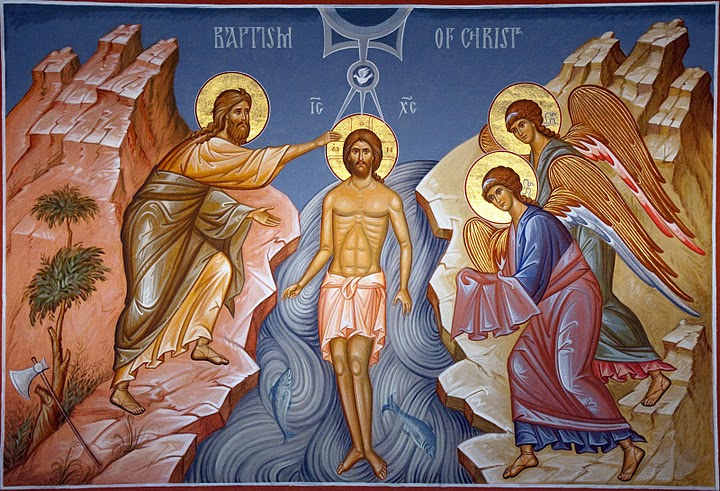
The very word “baptize” (Greek: baptizo) means to immerse. The Orthodox Church has always baptized by triple immersion, “in the name of the Father, and of the Son, and of the Holy Spirit” (Matthew 28:19). This is not incidental: it reflects the death, burial, and resurrection of Christ. The triple immersion also mirrors the three days Christ spent in the tomb, and symbolizes the fullness of participation in the life of the Holy Trinity.
In the Orthodox liturgy, the baptismal rite is elaborate and deeply theological. It involves prayers of exorcism, renunciation of Satan, confession of faith (the Creed), blessing and sanctifying of the water, anointing with oil, the baptism itself, Chrismation, and finally the reception of the Eucharist. This progression reflects the ancient initiation of catechumens into the Church and the fullness of their participation in Christ’s life.
What happens in Baptism?
1. Death, Burial, and Resurrection with Christ
In Baptism, we participate mystically in Christ’s Paschal Mystery—His death and resurrection. St. Paul writes: “Therefore we were buried with Him through baptism into death, that just as Christ was raised from the dead by the glory of the Father, even so we also should walk in newness of life” (Romans 6:4). St. Cyril of Jerusalem taught that as we descend into the baptismal waters, we die and are buried with Christ; as we emerge, we rise with Him, reborn.
This is a real, ontological death to sin and rebirth into the life of God. It is the fulfillment of our longing for spiritual renewal and the beginning of our journey toward theosis—becoming by grace what Christ is by nature.
2. The Ongoing Death to Sin
Baptism is not a “magic fix”—it is the beginning of a lifelong struggle. St. Paul exhorts the baptized: “Put to death therefore what is earthly in you” (Colossians 3:5). The baptismal grace we receive must be preserved and activated through ongoing repentance, faith, and participation in the sacramental life of the Church. When we fall, the Church provides the Mystery of Repentance (Confession) as the means to restore and renew the grace first given in Baptism.
3. Resurrection of Righteousness and New Life in Christ
Baptism inaugurates our new birth and our entrance into the Kingdom. We are joined to Christ’s glorified humanity and indwelt by the Holy Spirit (Romans 8:9-11). This new life is not just a change of status, but an ongoing, dynamic relationship: “If anyone is in Christ, he is a new creation” (2 Cor. 5:17). The resurrection begun in Baptism will be perfected in the general resurrection at the Second Coming.
4. Cleansing, Justification, and Sanctification
Through Baptism, we receive cleansing from our sins. As the Scripture says, “Repent, and let every one of you be baptized in the name of Jesus Christ for the remission of sins; and you shall receive the gift of the Holy Spirit” (Acts 2:38). St. Paul calls Baptism “the washing of regeneration and renewal by the Holy Spirit” (Titus 3:5). Baptism unites us to the saving work of Christ, justifies us, and sets us on the path of sanctification.
5. Full Communion with God and the Church
Baptism is the gateway to the Eucharist—the supreme mystery of communion with Christ and His Body. Through Baptism and Chrismation, we become members of the Church and can partake of the Body and Blood of Christ. Baptism also gives us access to all the other mysteries (sacraments) of the Church, and enables us to participate in her life and mission. It is the beginning of our journey toward union with God (theosis), the goal of the Christian life.
Baptism and salvation: Faith, repentance, and the lifelong journey
Many Protestants emphasize that one must be “born again” to be saved. The Orthodox Church agrees, but clarifies that salvation is not a one-time event or a mere mental acceptance. It is a lifelong process of uniting oneself to Christ, growing in holiness, and participating in God’s life by grace.
Faith and repentance are essential. Baptism without faith is just a washing; faith is what makes the waters effectual. The Church teaches that the grace of Baptism can remain “inactive” if not received with faith and repentance, and continually renewed through a living relationship with Christ and His Church.
Salvation is thus both an event (Baptism) and a process (the ongoing life of faith, repentance, and participation in the sacraments). The Orthodox vision of salvation is synergistic—a cooperation between divine grace and human freedom.
Why is physical baptism necessary?
Some traditions stress only faith or the “sinner’s prayer” as the means of new birth. The Orthodox Church insists on actual, physical baptism because this is how Christ instituted the mystery and modeled it for us. In baptism, we are physically united to Christ’s death and resurrection, not just in memory or symbol, but in reality. The water, our faith, and God’s grace together accomplish a mystery that transcends our understanding.
The Church fathers taught that sacraments are not merely symbols, but “visible words”—outward signs that convey the grace they signify. The physicality of Baptism affirms the goodness of creation and the incarnation: God saves us not as disembodied spirits, but as whole persons, body and soul.
Can someone be saved without baptism?
The Orthodox Church teaches that God is not bound by the sacraments, though we are. Salvation ultimately belongs to God, who is merciful and just. The Church recognizes “baptism of blood” (martyrdom for Christ before water baptism) and “baptism of desire” (explicit desire for Baptism when prevented by circumstances) as extraordinary means by which God can bestow saving grace.
However, since Christ Himself gave us Baptism, to knowingly reject it is to reject the means He provided for our salvation and communion with Him. The normative path to salvation is through Baptism, Chrismation, and incorporation into the Church.
Theological themes: Theosis and the image of God restored
Baptism is the beginning of the process of theosis—becoming “partakers of the divine nature” (2 Peter 1:4). Through Baptism, the image of God is restored in us, and we begin the journey toward likeness with God. The Holy Spirit indwells us, empowering us to “put on Christ” and to be transformed from glory to glory.
Baptism is also cosmic in scope. As St. Maximus the Confessor taught, in Baptism not only is the individual renewed, but the entire creation begins to be restored and gathered into Christ, the New Adam.
Conclusion: The gift and calling of Baptism
Holy Baptism is a profound, life-changing mystery in which we die with Christ and rise with Him, beginning a new life in which we continually die to sin and grow in communion with God. Through Baptism, we are born again—not just in thought or feeling, but in the very depths of our being. We are given the grace to become children of God, to walk the path of salvation, and to experience a real, living relationship with our Creator.
May we always thank God for this precious gift, unworthy as we are, and walk faithfully in the newness of life granted to us in Holy Baptism.
Further Reading and Resources
- The Orthodox Faith: Volume II—Worship, by Fr. Thomas Hopko
- “On the Mysteries” by St. Cyril of Jerusalem
- The Orthodox Way by Metropolitan Kallistos Ware
- The Service of Holy Baptism (full text available online)
Keep Reading: The Biblical Case for Infant Baptism