
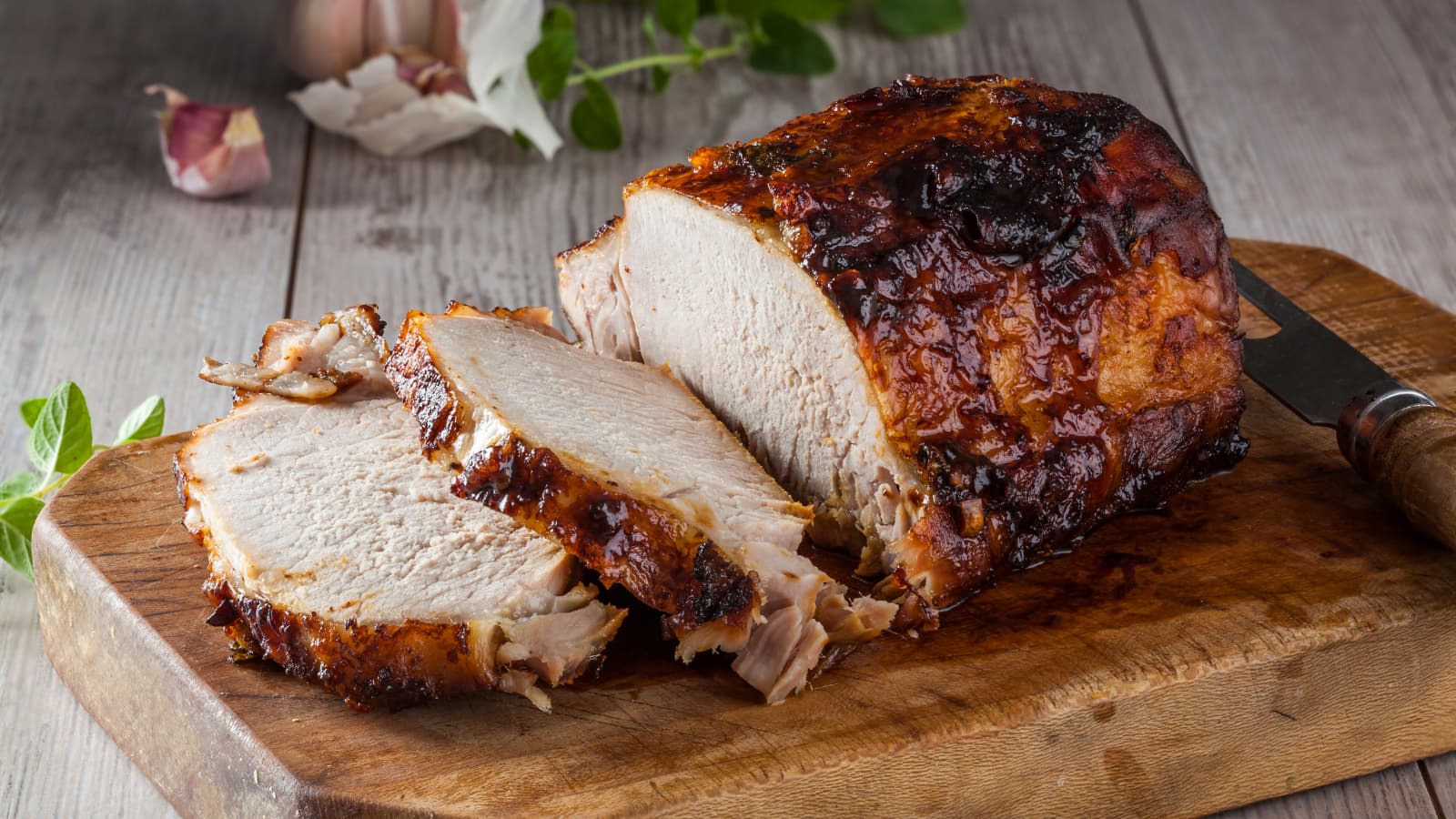
While the Old Testament forbids pork consumption for the ancient Israelites, Orthodox Christians can eat pork. The only exception is on fasting days when we abstain from all animal products, oil, and wine. What changed that allows Orthodox Christians to eat pork when our Jewish predecessors could not?
5 minutes
The separation of foods in Leviticus
In Leviticus 20:22-26, the Lord establishes a distinction between clean and unclean foods for the ancient Israelites:
You shall therefore keep all My statutes and all My judgments, and perform them, that the land where I am bringing you to dwell may not vomit you out. And you shall not walk in the statutes of the nation which I am casting out before you; for they commit all these things, and therefore I abhor them. But I have said to you, “You shall inherit their land, and I will give it to you to possess, a land flowing with milk and honey.” I am the Lord your God, who has separated you from the peoples. You shall therefore distinguish between clean animals and unclean, between unclean birds and clean, and you shall not make yourselves abominable by beast or by bird, or by any kind of living thing that creeps on the ground, which I have separated from you as unclean. And you shall be holy to Me, for I the Lord am holy, and have separated you from the peoples, that you should be Mine.
(Emphasis added)
This passage, and the verses that follow it, serves as the foundation of Jewish kosher laws. Some denominations of Christianity still continue to observe these restrictions today. The most notable of these is the Seventh Day Adventist Church. The Ethiopian Orthodox and Eritrean Orthodox also prohibit the consumption of unclean foods; however, their prohibition stems more from tradition. (It should be noted that these churches are not in communion with the Eastern Orthodox Church.)
What being holy means for Israel
In the passage from Leviticus above, we emphasized the words: “you shall be holy to Me”. What does it mean in this context, to be holy? The word most commonly translated as “holy” in the Old Testament (OT) is the Hebrew word “kadosh”, which comes from a verb that means “to separate for a special purpose”. In other words, being holy meant being separate, other, unmixed, in the same way that God is inherently separate, other, and unmixed in relation to the created world. The Lord gave Israel these restrictions to set them apart. He had a special purpose in mind: Israel would produce the Theotokos, the one who would become the Mother of the Son of God.
Not only did the Lord set these food restrictions to set Israel apart. But He did this to help them forsake the pagan ideas they adopted over two centuries of slavery in Egypt. Many of the animals prohibited for consumption in the OT were sacred to the Ancient Egyptians. In fact, we see images of these animals serving as personifications or symbols of their gods. These ideas had become so deeply rooted in the hearts of the Israelites that the moment they feared Moses would not return, they had Aaron craft a calf out of gold and immediately began to worship it (Exodus 32:1-35).
In His wisdom, the Lord gave Israel this detailed classification of animals to both show their auxiliary significance and to protect His people from the temptation of falling into idolatry.
Why are Orthodox Christians allowed to eat pork?
Eastern Orthodox Christians are free to eat pork on any day that the Church does not call us to fast. On fasting days, we should abstain not only from pork, but from all meat. We should also abstain from other animal products, like eggs and dairy, as well as wine and olive oil. We abstain from these things not because they are unclean, but because our denying them helps us fight against the passions. For more information about fasting in the Orthodox Church, check out our ultimate guide!
Why are we free to eat pork, should we choose to? Because Eastern Orthodox Christians no longer uphold the restrictions of the Old Testament. The Church does not prohibit the eating of any foods on the basis of cleanliness for three reasons. The first is Christ’s declaration in Mark 7. The second, St. Peter’s vision in Acts 10. And the third, the Council of Jerusalem in Acts 15.
Christ’s Declaration – Mark 7:18-23
So He said to them, “Are you thus without understanding also? Do you not perceive that whatever enters a man from outside cannot defile him, because it does not enter his heart but his stomach, and is eliminated, thus purifying all foods?” And He said, “What comes out of a man, that defiles a man. For from within, out of the heart of men, proceed evil thoughts, adulteries, fornications, murders, thefts, covetousness, wickedness, deceit, lewdness, an evil eye, blasphemy, pride, foolishness. All these evil things come from within and defile a man.”
Here, Christ makes a crucial point to His disciples that cannot be understated. He illustrates precisely what unholiness looks like, which the Pharisees embodied well despite their having followed the dietary laws so ardently. It is not the food we eat that makes us unclean. Rather, it is the sins which are born from the passions in our hearts.
St. Peter’s Vision – Acts 10:9-16
The next day, as they went on their journey and drew near the city, Peter went up on the housetop to pray, about the sixth hour. Then he became very hungry and wanted to eat; but while they made ready, he fell into a trance and saw heaven opened and an object like a great sheet bound at the four corners, descending to him and let down to the earth. In it were all kinds of four-footed animals of the earth, wild beasts, creeping things, and birds of the air. And a voice came to him, “Rise, Peter; kill and eat.”
But Peter said, “Not so, Lord! For I have never eaten anything common or unclean.”
And a voice spoke to him again the second time, “What God has cleansed you must not call common.” This was done three times. And the object was taken up into heaven again.
This vision was a sign to Peter, telling him to go to the Centurion Cornelius, a Roman and Gentile. Through Christ’s death and resurrection, He reconsecrated all of creation. Gentiles were no longer unclean, and neither was any food.
The Council of Jerusalem – Acts 15
The First Apostolic Council, recounted in Acts 15, decreed that Jewish Christians were free to observe the restrictions of the Mosaic Law, if they wished. However, Gentile Christians were exempted from doing so. The general position of the Council participants was expressed by the head of the Jerusalem community, James the Apostle. “Therefore I have reached the decision that we should not trouble those Gentiles who are turning to God, but we should write to them to abstain only from things polluted by idols and from fornication and from whatever has been strangled and from blood” (verses 19-20).
Conclusion: Pork is okay!
The food prohibitions in the Old Testament served to set Israel apart to prepare for the coming of Christ. They existed to help steer the Israelites away from idolatry. With the resurrection of our Lord and Savior Jesus Christ, all of creation has been cleansed and redeemed. Now, it is no longer necessary to isolate the people of God; in fact, the opposite is true. We are called to proclaim the good news of salvation to all people, regardless of their nationality. Jews and Gentiles together form the Body of Christ, and that which separated them has been abolished.
What does this mean? That all foods are clean, and pork is okay for Orthodox Christians to consume!
Keep Reading: Jesus Christ: The Promised Prophet, Priest, and King
8 Responses
I read on your page that Ethiopian orthodox are allowed to eat pork because that was an Old Testament. That is false. We are orthodox. We still keep the old Testament laws and new. We do not eat pork. Please fix that statement. Thank you very much is very misleading.
Gelila,
Christ is in our midst. Are you referring to this sentence? –> The Ethiopian Orthodox and Eritrean Orthodox also prohibit the consumption of unclean foods; however, their prohibition stems more from tradition. (It should be noted that these churches are not in communion with the Eastern Orthodox Church.) This claims that you prohibit the consumption of pork – that you are not allowed to consume it. We never claimed that you are allowed to eat pork. God bless.
I am the Lord your God
I change Not
Peter Vision was about Jews and Gentiles
Read next Chapter
God cannot change his Mind
If he did
He would Not be. God
David,
Christ is in our midst! Thank you for your comment. You are right that God does not change—He is eternally faithful and unchanging in His nature. However, as the Eastern Orthodox Church teaches, God’s relationship with humanity has unfolded in stages throughout salvation history. The laws given to Israel, including dietary restrictions such as not eating pork, were part of the Old Covenant. These laws served to set apart the people of Israel and to prepare them for the coming of the Messiah.
With the coming of Christ, a New Covenant was established, fulfilling and transforming the old. Jesus Himself declared all foods clean (Mark 7:18-19), teaching that it is not what goes into a person that defiles them, but what comes from the heart. The vision given to St. Peter (Acts 10) was indeed about welcoming the Gentiles, but it also made clear that the ceremonial food laws of the Old Covenant were no longer required for those in Christ. In Acts 15, the Apostles, guided by the Holy Spirit, did not require Gentile Christians to follow the Mosaic dietary laws, including abstaining from pork.
The unchanging God brought about a new stage in His relationship with us through Christ, fulfilling the purpose of the Old Covenant and establishing the New. Orthodox Christians, therefore, are not bound by the Old Testament dietary restrictions but are called to live in the freedom and responsibility of the Gospel, focusing on purity of heart and obedience to Christ. God bless!
I understand your reasoning. But is there any didactic reason for prohibiting pork? The prohibitions mentioned in the council of Jerusalem leave out theft and gossip, which are explicitly prohibited elsewhere in the new testament. Paul also circumcised Timothy in accordance with Jewish law even though he was a gentile (at least on his father’s side), so it seems Paul was more sensitive to Jewish custom as laid out in Mosaic law (circumcision) and even Jewish cultural tradition (heritage being traced through the mother) than many Christians are today. It seems that the teaching that Christians are permitted to eat pork (and rabbit, camel, etc) leaves a hole in our comprehension about how to relate to Leviticus 11 – and other passages. If it’s not applicable, why not skip it? If it’s still valuable for teaching and training in righteousness, how so?
Josh.
Christ is Risen! You raise several important points about the teaching value of Old Testament food laws, the decisions of the Apostles, Paul’s actions, and the Christian relationship with passages like Leviticus 11.
Indeed, there was a didactic reason for the prohibition of pork and other foods in ancient Israel. These laws served to set Israel apart from its neighbors, shaping their identity as God’s covenant people. They cultivated daily mindfulness and discipline, reminding the people that even ordinary actions like eating were connected to their relationship with God. Church Fathers such as St. Irenaeus and St. John Chrysostom saw in these laws a deeper lesson: if God cared about what entered the body, how much more does He care about what enters the soul?
When the Apostles gathered at the Council of Jerusalem (as recorded in Acts 15), they didn’t repeat every moral commandment (like prohibitions against theft or gossip) because these were already understood as part of the enduring moral law, which Jesus and the Apostles continually taught. Instead, the Council focused on the pressing issue of their time: whether Gentile converts had to follow the ceremonial and ritual aspects of the Mosaic Law, especially circumcision and dietary rules. The moral law — loving God and neighbor, honesty, chastity — remained central and was never set aside. The debate was over the ritual and ceremonial practices that set Israel apart.
You also mention Paul’s decision to circumcise Timothy, even though Timothy had a Gentile father. Paul’s action here was pastoral and strategic, not a reversal of the decision on circumcision. Because Timothy’s mother was Jewish, Paul knew that Timothy’s ministry among Jews would be more effective if he were circumcised. This wasn’t about enforcing the Mosaic Law for salvation, but about removing barriers for the sake of sharing the Gospel, as Paul himself explains elsewhere that he becomes “all things to all people” (1 Corinthians 9:19–23).
As Orthodox Christians, we do not simply skip over passages like Leviticus 11 or consider them irrelevant. Rather, we read them as part of God’s unfolding story that finds its fulfillment and meaning in Christ. The ceremonial laws, including dietary restrictions, were given to teach holiness and prepare God’s people for the coming of the Messiah. When Christ came, He revealed the true intention behind these laws: that what truly defiles or sanctifies a person is not what enters the mouth, but what comes from the heart (see Matthew 15:11, Mark 7:18–19). The Old Testament dietary laws are no longer binding commandments, but they remain spiritually valuable for us.
Reflecting on these laws reminds us that God cares about every aspect of our lives. They teach us discipline and mindfulness in the details of daily living, and they point us toward the deeper purity God desires—not just outward, but inward. If we were to skip over Leviticus 11, we would miss a vital part of salvation history and the story of how God prepared His people for the fullness of the Gospel. These passages show us the seriousness of holiness, the reality of being set apart, and God’s faithfulness across time. As St. Paul affirms, “All Scripture is inspired by God and profitable for teaching…” (2 Timothy 3:16). The Orthodox Church reads the Old Testament in the light of Christ, finding in it both a witness to God’s saving work and a pattern for our own journey toward holiness.
We hope this helped address your questions. God bless!
Hello, so is eating foods like blood sausage, black pudding, etc. be allowed? It is blood but it is cooked. I think it is different than to eat from an animal that just got slaughtered therefore stopping the flow of blood in the animal. However, I do not know how the Church interprets it.
Thanks in advance.
Zach,
Christ is in our midst! Yes, foods made from animal blood, such as blood sausage and black pudding, should be avoided by Orthodox Christians, even when the blood has been cooked. The distinction you are making is understandable, but the Church’s prohibition is not limited to eating blood immediately after an animal has been slaughtered. At the Council of Jerusalem, the Apostles instructed Christians to abstain from “blood” (Acts 15:28–29). The Church continued to uphold this apostolic prohibition. Canon 67 of the Quinisext Council (Trullo) specifically addresses those who prepare the blood of an animal “by any art” to make it edible and then consume it. The canon therefore does not make an exception simply because the blood has been cooked or otherwise prepared. So if blood is intentionally collected and prepared as an ingredient in food, an Orthodox Christian should abstain from it. This would include blood sausage, black pudding, blood soup, and similar foods.
At the same time, we should not become unnecessarily anxious about ordinary meat. The canon is addressing the deliberate consumption of animal blood as food, not tiny amounts of residual moisture in meat. If you have eaten something containing blood without realizing it, there is no reason to become frightened or scrupulous. Simply avoid it once you know.
As with all of the Church’s disciplines, the purpose is not to create fear around food. We receive these practices in obedience to Christ and His Church and as part of our ascetical life. When something is unclear, asking your priest or confessor is always the safest course, since he can apply the Church’s teaching to your particular circumstances. God bless you for asking, and may God grant you wisdom as you continue learning the Orthodox way of life!