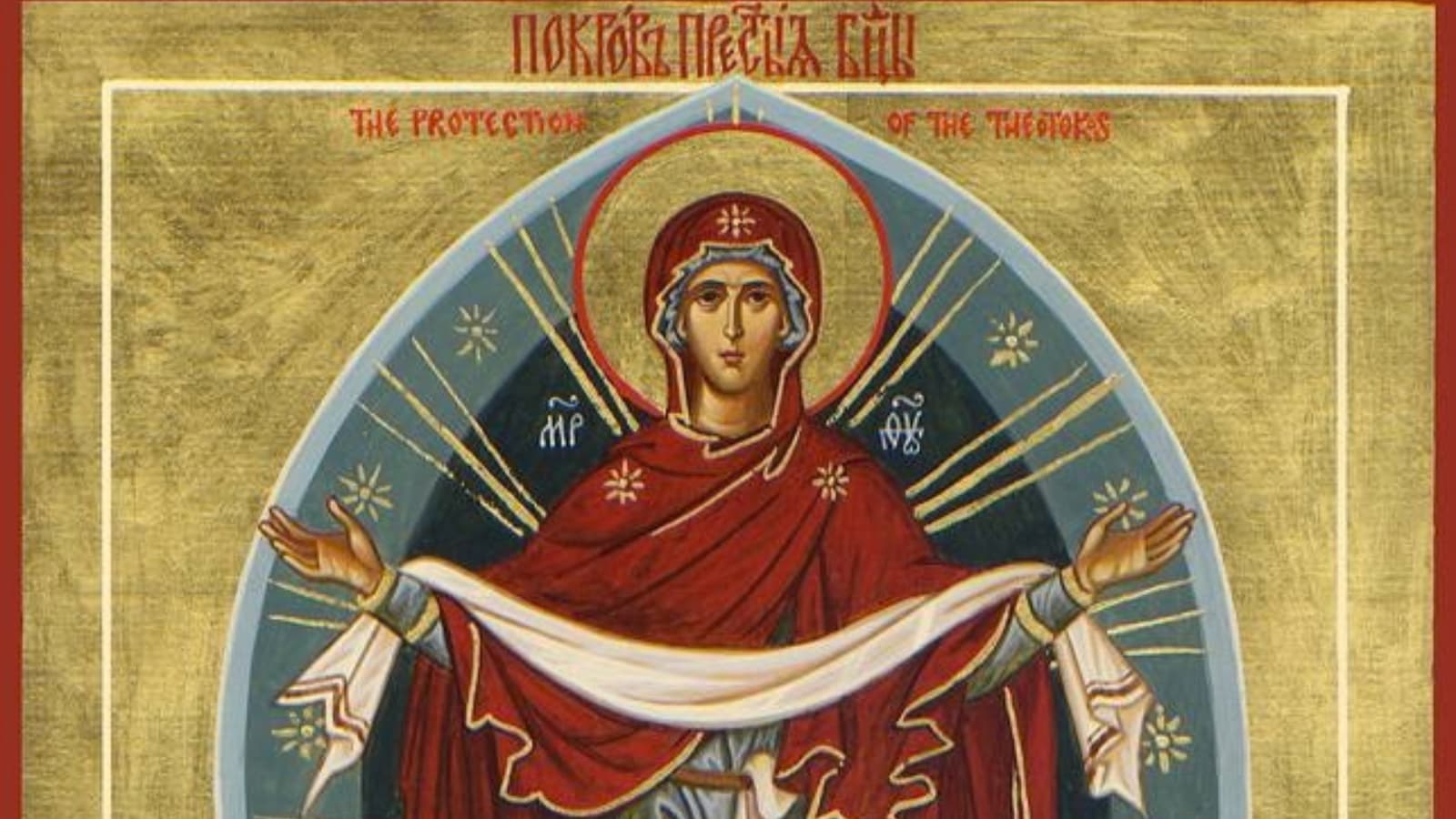
The Protection of the Theotokos, known as Pokrov, is an Orthodox feast celebrated on October 1st in many Orthodox traditions. The feast commemorates a vision in which the Mother of God appeared among the faithful, praying for them and spreading her veil over them as a sign of her protection.
This image has remained at the heart of the feast. Orthodox Christians honor the Theotokos as the Mother of God and ask for her prayers and intercession before her Son, Jesus Christ. Her protecting veil therefore points us toward the care of God and the communion shared by the Church on earth and in heaven.
The story of Pokrov has been preserved through Orthodox tradition, hymnography, and iconography. The Church continues to celebrate the feast as a reminder that Christians can turn to God in every circumstance and seek the prayers of those who have entered into His presence.
In this article, we will explore the history of the Protection of the Theotokos, the vision at the Church of Blachernae, and the meaning of the protecting veil. We will also consider how the Orthodox Church celebrates Pokrov and what this feast teaches us about prayer and trust in God.
7 minutes
What is the Feast of the Protection of the Theotokos?
The Protection of the Theotokos commemorates the Mother of God as a loving intercessor for the Christian people. The feast is also known as Pokrov, a Slavic word meaning “protection” or “covering”, or the Holy Skepi, meaning “cover” or “shelter” in Greek.
The feast centers on the image of the Theotokos spreading her veil over the faithful. Orthodox tradition connects this image with her appearance at the Church of Blachernae in Constantinople during an All-Night Vigil. There, she prayed for the Christians gathered in the church and extended her veil over them as a sign of her protection.
The Church understands this protection through the Theotokos’ intercession. Orthodox Christians ask her to pray for them and to bring their petitions before her Son, Jesus Christ. The feast’s troparion itself asks the Theotokos to cover the faithful with her protecting veil and entreat Christ to save their souls. Pokrov reminds Christians that the Church remains united in prayer, with the saints interceding before God for those still living on earth. The Theotokos stands among those saints in a unique way as the Mother of Christ.
The Protection of the Theotokos invites us to approach God with confidence and humility. We bring our needs before Him while asking the prayers of His Mother and the saints.
The Vision at the Church of Blachernae
According to Orthodox tradition, the Protection of the Theotokos began with a miraculous vision in Constantinople during the tenth century. The vision took place in the Church of Blachernae during an All-Night Vigil. Among those praying was St. Andrew the Fool-for-Christ, accompanied by his disciple, St. Epiphanius. During the service, St. Andrew looked toward the heavens and saw the Most Holy Theotokos approaching in radiant light. She appeared with an assembly of saints, including St. John the Baptist and the Holy Apostle John the Theologian.
The Theotokos then stood before the altar and prayed with tears for the Christians gathered in the church. Afterward, she approached the bishop’s throne and continued her prayer. She then took her veil and spread it over the people as a sign of her protection from visible and invisible enemies.
St. Andrew turned to Epiphanius and asked whether he also saw the vision. Epiphanius confirmed that he did. The two saints remained in awe as they watched the protecting veil shine over those gathered in prayer.
The Church preserves this vision as the central image of the feast. The Theotokos stands among the faithful, praying before God and extending her protecting veil over them. Her intercession remains at the heart of the Church’s celebration of Pokrov.
Who were St. Andrew and St. Epiphanius?
St. Andrew the Fool-for-Christ lived in Constantinople during the tenth century. According to his life, he willingly embraced the difficult path of foolishness for Christ, enduring poverty, ridicule, hunger, and exposure while devoting himself to prayer. Through this life of humility, repentance, and self-denial, he received gifts of discernment and spiritual insight. The Church remembers him especially because he witnessed the Theotokos praying for the faithful at the Church of Blachernae.
His disciple, St. Epiphanius, accompanied him to the vigil at Blachernae and also witnessed the vision. The tradition gives us little additional information about Epiphanius, but his presence carries an important significance. St. Andrew did not stand alone as the sole witness to what he saw. Epiphanius also confirmed the appearance of the Theotokos and her protecting veil.
The Church therefore remembers both saints in connection with the feast. Their witness points us toward the central message of Pokrov: the Theotokos continually intercedes for the people of God.
What does the Protection of the Theotokos teach us?
The protecting veil of the Theotokos expresses her loving intercession for the people of God. Orthodox Christians ask her to pray for us because she remains united to her Son and continually brings our prayers before Him. The feast teaches us to seek God’s protection throughout every circumstance of life. Christians face illness, grief, temptation, uncertainty, and many other trials. In every circumstance, we can turn toward Christ in prayer and ask the Theotokos and the saints to intercede for us.
The feast also reminds us of the communion of the Church. Those who have fallen asleep in Christ remain alive in Him, and the saints continue to pray for the people of God on earth. The Theotokos holds a unique place among them as the Mother of Christ and the first among the saints. Pokrov therefore encourages us to bring our fears, needs, and hopes before God with faith. We ask the Theotokos for her prayers and place our trust in Christ, who is our Savior and our refuge.
As we celebrate her Protection, we are invited to deepen our prayer, strengthen our trust in God, and remain faithful to Christ through every season of life.
How Orthodox Christians celebrate Pokrov
Orthodox Christians celebrate the Protection of the Theotokos through the prayer and worship of the Church. Where the feast receives its own service, parishes may celebrate Vespers, Matins, and the Divine Liturgy with hymns dedicated to the Theotokos. The feast’s services focus on her prayer for the faithful and her protection under the grace of God.
The troparion asks the Theotokos to “cover us with your Protecting Veil” and to entreat Christ to save our souls. The kontakion likewise describes her praying to God for the faithful together with the saints, angels, apostles, and prophets.
Orthodox Christians can also mark the feast through personal prayer at home. Families may read the feast’s prayers and hymns, offer prayers before an icon of the Theotokos, and ask for her intercession for themselves and those they love.
The liturgical calendar differs among Orthodox traditions. Many Orthodox Churches celebrate Pokrov on October 1, while the Greek Orthodox Archdiocese currently commemorates the Holy Protection on October 28. Local parish calendars therefore determine when the feast receives liturgical observance. Whatever the local calendar, the Church gathers to honor the Theotokos and seek her prayers. Pokrov gives Orthodox Christians another opportunity to bring their lives before God in prayer and thanksgiving.
Conclusion
The Feast of the Protection of the Theotokos invites us to remember the loving care of the Mother of God and the prayers of all the saints. Her protecting veil remains a beautiful image of the Church gathered in prayer and seeking God’s mercy. As we celebrate Pokrov, we can bring our needs before Christ with renewed faith and ask the Theotokos to intercede for us. Her life points us toward her Son and shows us the faithfulness of a heart completely devoted to God.
May the Most Holy Theotokos pray for us! May she strengthen us in every trial, and lead us ever closer to her Son, our Lord and Savior Jesus Christ.